My Two Takeaways After Summiting Mt Kilimanjaro
- Kim Merritt
- Nov 17, 2025
- 8 min read

Before I hiked Mt Kilimanjaro in August, I wasn't quite sure what to expect. I'd heard everything from "you don't need to train at all" to "it's the hardest thing you'll ever do in your life." I expected to come back with one big, obvious thing to talk about—maybe a grueling summit day, a dicey stomach mishap, or at the very least, an inflated ego. But everything went so smoothly. We had optimal weather, no major altitude issues, and for me, a summit night that was oddly meditative. Sure, my left quad started protesting during the final hour on the descent, but if being mildly uncomfortable for one hour was the worst of my eight-day trek? I'll take it.
I don't want to downplay the experience of hiking for six days up, two days down. At 19,341 feet, the summit took me 4,836 feet higher than I'd ever been before—well, on foot. One time in Bolivia we drove straight up to over 15,500ft, where I spent the next half hour curled up in the fetal position on the floor of a dirty van, chomping on coca leaves and crying out for my mother. But thankfully this was nothing like that. The whole hike was highly enjoyable. I felt very at peace the entire time, and more like myself than I'd felt in years.
When I got home, I started to think about what to write. In a lot of ways, Kilimanjaro is like a rite of passage in the hiking world. It's been summited and written about thousands of times, and without a profoundly transformational personal experience myself, I didn't feel like I had much to add to the conversation—except for my two cents that maybe its difficulty lies somewhere between not needing to train at all, and being the hardest thing I've ever done.
So after sitting at my computer, staring at the dreaded blinking cursor for months, it started to sink in, and I came to two realizations:
The importance of teamwork. As cliche as it sounds, the reason Kilimanjaro went so smoothly for me was because of everyone else who helped me get to the top. I can almost guarantee that I'd be singing a much different tune had I not had the knowledge, support, and help of so many others along the way.
I did have a transformation after all. It was subtle, and it happened off the mountain.


The Importance of Teamwork
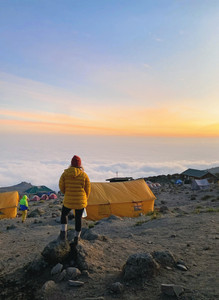
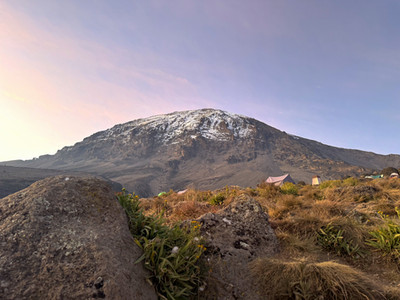
Working as a team is very much a thing in mountaineering and rock climbing, but less so in hiking, which is likely why it didn't occur to me until well afterwards. Even though it was my two legs that got me up the mountain day after day, so many people helped make my trek all that much more easier.
My clients.
WHOA Travel was started by cofounders Allison and Danielle after their own hike up Kilimanjaro, and hearing their stories was the only reason Kili was ever on my radar in the first place. Their years of experience on the mountain, and the local guides and porters they work with (more on them below) laid the ground work for a successful climb. Everything from trip prep and packing lists, to their choice of the Machame Route, which is optimally paced for acclimatization, gave us the best possible chance at summit success.
My partner.
Joe deserves a special shoutout for his own resilience in helping me get to the top. I have a natural tendency to tell people to fuck off when they tell me what to do. But despite my F-U-attitude, he somehow managed to successfully incorporate strength training into my fitness routine. All that work definitely helped me carry my pack without sore shoulders or an aching back, and increased my ability to tolerate significant periods of intensity (and rage) without rest.
Aside from kicking my ass in the gym, he also arranged for us to crash in at least a half dozen spare bedrooms and campers in Colorado so that I could train on actual hiking trails and mountains for the last five weeks before my trip. He served as my personal gear guru when I needed to invest in a warmer bag and puffy, and perhaps his most clutch role, he became my "snack sponsor," making sure I had enough Costco-sized packs of Cheez-Its, fruit snacks, Built Puff Bars, and Liquid-IVs to fuel my whole trip.
My trainer.
Before I knew that we were going to Colorado, I worried that my Ohio training plan, which included a half-broken treadmill from the 80s and a 44ft tall hill, wouldn't be enough to get me up the mountain enjoyably. So I hired an actual trainer (sorry Joe)—Becki Rupp of Trailblazer Wellness. She specializes in adventure training and had done Kili herself less than a year prior, so I knew her guidance would give me the confidence I needed to know I was doing all that I could to set myself up for success.
Becki built off of my existing plan, giving me structure to ensure I logged enough time on my feet to prep for an eight-day trek. Not only did that plan help me stick to a no-brainer schedule, where all I had to do was simply show up and check off the activity, but regular check-ins and chats (I love a good accountability partner) and time for Q&A. After we determined we were going to Colorado, she gave me suggested trails to tackle, elevation gain to aim for, and so on. As an overachiever, I of course always strived to do even more than she recommended, because in my mind there's no such thing as training too much.
My friends.
I had a few friends who've summited Kilimanjaro and told me all about what to expect. Thankfully my experience wasn't nearly as filled with bodily excrement as theirs.
The WHOA Travel GALs.
Everyone from Alyssa and Amanda who guided us up the mountain, to Karen, who sorted baggage and travel logistics for me back in Moshi so that I could completely check out from planning stress while on the mountain, to Nicole, a 14-time summiter whose words "eaters are summiters" rang in my head every time I sat down for a meal and stuffed my face with crepes.

The hiking group.
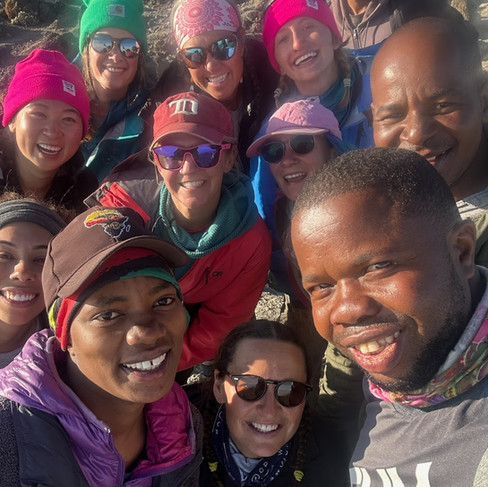
The whole group of amazing women hiking alongside me. We started as strangers, and ended feeding each other cake with our hands, while clapping and cheering for one another. With constant conversation, entertainment, and shared snacks, there was never a dull moment.
Drugs. I'm not usually one to take meds unless I'm really suffering, but I did not hesitate to pop a Diamox every day, a Zofran every time the slightest twinge of nausea hit, and a handful of Ibuprofen once we hit above 15k feet. I only noticed a few minor symptoms from altitude, but these pills took care of them almost immediately, every time.
Our porters and guides.
Google anyone's Kilimanjaro experience and you'll see that the porters and guides are the ones who truly make summiting possible. After experiencing it myself, I can say yes, 1,000%.





Our conga line, err, hiking group, was about 20 hikers, and a support crew of over 70. When I first heard there would be almost 100 people in our group it actually made me second guess if this was something I even wanted to do. But once I accepted that this is just what hiking Kilimanjaro is—a chance to hike one of the Seven Summits alongside a full team who makes it as comfortable as possible—I accepted it for what it is.
Our eight guides took turns leading us up, while porters carried each of our bags of gear, tents, food, toilets, and everything else. Every morning they packed up our tents and beat us to our next camp, having it set up before we arrived. It made for a very crowded trail, as we regularly pulled off to the side to let porters pass us with our bags on their heads.


On summit night we handed our daypacks over to our guides so we could hike those last ~4k feet without the weight, which was something I seriously struggled to do. I take pride in pulling my own weight up mountains (I once led a group up Mt Whitney with 55lbs of shared gear on my back), so I wasn't stoked about someone else carrying my water and snacks. But since it was my first time venturing that high, I also didn't want to be the only one in the group who didn't summit, simply because I'd been stubborn in insisting that I carry my own bag and bonked out. So I threw my ego in my pack and handed it off to my guide, Hillary.



Summit day was my fav. I loved the trudge uphill in the dark, with the snowy peak ahead of us illuminated by moonlight. I started to get deliriously sleepy around 18,500ft from lack of oxygen, but overall I love the sort of methodical trance my brain goes into when I have to do something like that for hours on end. The only thing I think I should've done differently was drink more water. I could tell I was getting dehydrated, but we were making fewer stops during this final push and with four layers of pants on, it wasn't as easy to pull over for a quick pee as it had been in my Gnaras every other day on the trail.
After the sun came up and we reached the summit, I was surprised at how great I felt. Some people were eager to head back down, but I felt like I could stay up there for hours. I was so grateful in that moment that I had made it to the top without any major setbacks or challenges.
Yet despite whatever this indicates I need to address in therapy, part of me didn't feel like I accomplished much once I made it to the top. Maybe because there was no moment of wanting to give up that I had to overcome? Or because someone else was carrying my bag? Or because I'm a psycho who feels I have to be on the brink of collapse in order to feel like I pushed myself hard enough? Whatever the reason, it'd be foolish not to acknowledge a big reason I made it to the top was because all my gear was carried for me.




My Own Kilimanjaro Transformation
It's only after writing all of this that I realized, I did in fact experience a transformation. But it happened off-mountain, well before my trip. This was the first big hike where I felt like I could confidently call myself an experienced hiker. Which is wild, because over the past decade I've hiked hundreds of miles around the American west, South America, and Asia, done the Patagonia W Trek, and led a group up Mt Whitney.
Every day on that mountain I felt like I belonged there. I used to be intimidated to show up in certain outdoor spaces because I worried if I was fit enough, fast enough, experienced enough. This time I felt fully prepared, capable, and never like I was in over my head. Granted I didn't have to orchestrate any of the details, but I relished every moment on Kili, and it gave me reassurance that this is in fact, where I belong. Suddenly all of the "hard hikes" I've had ruminating in my mind now felt doable. Oftentimes our minds make big hikes feel scarier than they actually are.
In fact, that post-summit bliss brought a bit of foolish optimism. I remember coming down from the summit, basically skiing through volcanic ash with the biggest smile on my face, feeling like I could ignore any technical know-how and glide my way up another 3,000ft with nothing more than my mindset and legs. I thought "if I can summit Kilimanjaro, surely I can summit Aconcagua?! Maybe my body is awesome at handling high altitude, maybe Everest wouldn't be so hard? I NEED TO GO HIGHER, HIGHER!"
Overall I’m so glad I was able to experience Kilimanjaro the way that I did, because it’s exactly what I’d hoped and trained for—a successful summit that was also enjoyable. No altitude sickness, no feelings of inadequacy, just pure, downright enjoyment on a beautiful mountain. I couldn't have asked for a better experience, and I'm stoked to start thinking about my next high-altitude experience.